
In 2025, many authors make outstanding contributions to our journal. Their articles published with us have received very well feedback in the field and stimulate a lot of discussions and new insights among the peers.
Hereby, we would like to highlight some of our outstanding authors who have been making immense efforts in their research fields, with a brief interview of their unique perspectives and insightful views as authors.
Outstanding Authors (2025)
Anabel Carmona-Nunez, Biobizkaia Health Research Institute, Spain
Mariia A. Parfenenko, Veltischev Institute, Russia
Tyler Kingdon, Rady Children's Hospital, USA
Andreina Giron, Children’s Hospital Orange County, USA
Ignacio Oulego Erroz, The University Care Complex of León, Spain
Srujan Ganta, Rady Children’s Hospital, USA
Christopher M. Horvat and Mohammed A. Shaik, UPMC Children’s Hospital of Pittsburgh, USA
Yoshiki Kusama, Osaka University Hospital, Japan
Sheikh Arif Maqbool Kozgar, Latrobe Regional Health, Australia
Outstanding Author
Anabel Carmona-Nunez

Anabel Carmona-Nunez is a pediatrician at a Health Center in Barakaldo. She earned her medical degree from the University of Alcalá de Henares (Madrid) and completed her pediatric residency at Cruces University Hospital (Barakaldo), where she developed a particular interest in pediatric oncology during her final year. She undertook external rotations at Niño Jesús University Hospital (Madrid) and Garrahan Hospital (Argentina). After completing her residency, she pursued a post-residency research fellowship at the Biobizkaia Health Research Institute, focusing on pediatric oncology. Her work involved fertility preservation in pediatric oncology patients and the publication of a case report on a neonate diagnosed with congenital methemoglobinemia due to a novel genetic mutation. She is deeply committed to comprehensive pediatric care, which has led her to continue working in primary care while maintaining an active interest in clinical research and the advancement of pediatric oncology.
In Dr. Carmona-Nunez’s opinion, an author must possess several key skill sets to be effective and impactful. Precision and objectivity are essential to ensure that the content is clear, accurate, and credible. Discipline is equally important, as writing requires a significant investment of time and sustained effort. An author must be willing to dedicate the necessary hours to develop and refine their work. Additionally, perseverance is crucial; the writing process can be challenging and often requires resilience in the face of setbacks or revisions. Finally, a strong sense of personal motivation drives an author to pursue their goals with dedication and passion. To her, these qualities—precision, objectivity, discipline, perseverance, and intrinsic motivation—are fundamental to producing high-quality and meaningful work.
To avoid biases in one’s writing, Dr. Carmona-Nunez stresses that it is essential to critically question each idea before including it in the text. Every statement should be filtered through the lens of scientific reality, and supported by objective evidence that justifies the conclusions being drawn. This process helps determine whether the available evidence is truly sufficient to support a particular judgment or if further validation is required. In essence, avoiding bias involves maintaining a constant attitude of self-criticism and reflection throughout the writing process. Being self-critical allows authors to identify and correct potential assumptions or subjective influences, ultimately leading to more accurate, balanced, and credible work.
“My motivation for academic writing lies in the desire to contribute to scientific knowledge and to strengthen the foundations of evidence-based medicine. In clinical practice, we are constantly required to make decisions, and it is essential that these decisions are guided by the best available evidence. To achieve this, we rely on high-quality scientific articles that provide relevant data and keep us up-to-date. Furthermore, ongoing research is indispensable, as reality is constantly evolving and science must evolve with it. Academic writing is one way to ensure that our understanding advances alongside the changes we observe in medical practice and in society as a whole,” says Dr. Carmona-Nunez.
(by Brad Li, Masaki Lo)
Mariia A. Parfenenko

Mariia A. Parfenenko is a biomedical researcher at Veltischev Institute, specializing in clinical genetics, as well as an educator. Her main interests in clinical research include genetics of neurodevelopmental disorders - primarily syndromic forms of autism spectrum disorder - as well as rare and unique phenotypes. Having worked at Veltischev Institute since she was 15 years old, Mariia was able to participate in several research projects focusing on imprinting disorders, cardiogenetics, neurogenetics, as well as skeletal and overgrowth disorders, gaining diverse clinical and research experience. At 22, Mariia is on track to graduate from Lomonosov Moscow State University, Faculty of Medicine, while simultaneously receiving training in pedagogy and clinical psychology. She has recently begun working on her PhD, focusing on genotype-phenotype associations in syndromic autism. Follow her on ResearchGate.
TP: What are the key skill sets of an author?
Mariia: Data synthesis and objectivity, attention to detail, as well as the ability to write clearly and consistently. Also, while those can hardly be called skills – genuine interest and passion for your research area.
TP: How to avoid biases in one’s writing?
Mariia: While every academic work is not just pure data presentation – it is a narrative; an author must ensure that it is the data driving the narrative – not the other way around. It’s not about what we would like to say, but what we can say with the data we have – especially the imperfect, the unexpected and the thought-provoking parts. The more detailed and nuanced your work is – the more valuable it is as part of the scientific discussion.
As for analyzing the data presented by our fellow researchers - obviously, we have all heard about logical fallacies and “cherry picking” data. But taking it a step further – when reviewing an article for the “introduction” or “discussion” sections – while deciding to cite or not to cite – take a moment to consider whether this decision is based on data quality, or other reasons. I would also encourage checking the “methods” section, making sure that data were collected and processed in a way that meets your standards, as well as reading the reviews of the article (if available), since the reviewers’ comments may help you think of unexpected ways to consider your own and your colleagues’ results.
TP: Academic writing takes a lot of time and effort. What motivates you to do so?
Mariia: Having fallen in love with clinical genetics and biomedical research as a child (and having pursued that dream since I was a teenager), I am still very excited about every part of my job. My main motivation are my colleagues – most importantly – the incredible team of doctors and researchers that I’ve had the honor to work with for the past 8 years – who have taught me everything I know and have supported my professional and personal development since day one. I love our collaboration and want the results of our work to be shared with the wider research community. I recognize the value of scientific discussion and data sharing, and am ecstatic to be able to participate in it to read works (and have my work read) by researchers all over the world. Additionally, our patients often present challenges that necessitate conducting experiments and analyzing large datasets, with the results of these efforts often being too compelling not to publish.
(by Brad Li, Masaki Lo)
Tyler Kingdon

Dr. Tyler Kingdon is an attending physician in the cardiothoracic intensive care unit at Rady Children's Hospital, San Diego and an assistant clinical professor at UC San Diego School of Medicine. He is originally from Northern California and earned his undergraduate degree from the University of California, Davis. He completed his medical degree at Georgetown University and pediatrics residency at LSU Health, Children's Hospital New Orleans. He then attended Children's Hospital Los Angeles for his pediatric critical care fellowship. His cardiac critical care fellowship was completed at Rady Children's Hospital in San Diego, where he joined the faculty upon graduation. Dr. Kingdon has a special interest in developing evidence-based clinical care pathways and vascular access in the ICU.
TP: What are the key skill sets of an author?
Dr. Kingdon: Key attributes of successful authors begin with dedication and a genuine belief in the value of their work. Publishing requires persistence through multiple revisions, adherence to detailed journal requirements, and a willingness to refine your ideas until they are as clear and rigorous as possible. Effective authors are also curious, open to feedback, and committed to scientific integrity. Willingness to collaborate is essential: strong communication with co-authors, mentors, and reviewers strengthens the final manuscript. Ultimately, successful authors balance passion for the topic with the discipline needed to bring a manuscript from concept to publication.
TP: How to avoid biases in one’s writing?
Dr. Kingdon: Avoiding bias in medical writing is challenging because our work is shaped by both conscious and subconscious influences; from clinical experience to broader societal forces. The first step is self-awareness: acknowledging that bias exists and reflecting critically on the assumptions underlying your interpretation of data. Seeking input from diverse, objective readers is essential, as they can identify blind spots we may not see ourselves. Equally important is engaging with editors and reviewers; as one of their key roles is to help sharpen the science and minimize bias in presentation. Remaining open, reflective, and willing to revise are keys to producing balanced and rigorous work.
TP: Academic writing takes a lot of time and effort. What motivates you to do so?
Dr. Kingdon: What motivates me is a deep belief in the value of the work. Practicing medicine is complex, and when I encounter a difficult case or a question with limited literature behind it, I feel a strong internal drive to seek answers. Writing becomes an extension of patient care, an opportunity to solve a problem, clarify an uncertainty, and share those insights with the broader medical community. If a manuscript I publish helps even one clinician make a better decision, or leads one patient to a better outcome, then the effort is undeniably worthwhile.
(by Brad Li, Masaki Lo)
Andreina Giron
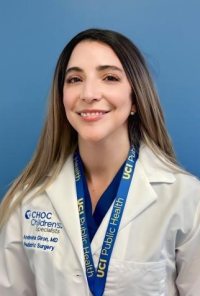
Dr. Andreina Giron, MD, MS, is a General Surgery Resident at Montefiore/Albert Einstein College of Medicine, a Pediatric Surgery Research Fellow at Children’s Hospital of Orange County (CHOC), and a PhD candidate in Epidemiology & Biostatistics at the University of California, Irvine. Her research focuses on congenital anomalies, neonatal critical care, ECMO outcomes, trauma epidemiology, and disparities in access to surgical care. She works extensively with multicenter registries such as ELSO, PHIS, NTDB, and NVDRS, producing data-driven insights that inform clinical decision-making and prenatal counseling. Recent projects include modeling survival in neonates with congenital lung malformations on ECMO, typologies of legal-intervention fatalities using latent class analysis, and disparities in pediatric trauma and breast cancer outcomes. Her work integrates rigorous statistical methodology with her commitment to vulnerable populations, especially children and medically underserved communities.
Dr. Giron believes that academic writing is crucial because it serves as the main method for communicating, validating, and progressing scientific knowledge. Clear and rigorous writing transforms data into meaningful conclusions, enables others to reproduce or challenge findings, and establishes the foundation for evidence-based medicine. Without strong academic writing, research loses impact—results become inaccessible, misunderstood, or unable to influence policy, practice, or future studies. Writing is not just a reporting tool; it is a scientific act that shapes how discoveries are interpreted and used.
In Dr. Giron’s view, a strong academic author must be clear, precise, and intellectually honest. They need curiosity to ask meaningful questions, discipline to analyze data rigorously, and humility to acknowledge limitations. Persistence is critical—most papers require multiple revisions and rejections. Good authors also communicate logically, write concisely, and maintain ethical responsibility in presenting data. Collaboration and openness to feedback are equally important.
“Balancing clinical duties, PhD coursework, motherhood, and research means I have to carve out protected time strategically. Time for writing rarely appears on its own—it must be deliberately created. Successful clinician-scientists protect writing time by treating it like any other clinical obligation: scheduled, non-negotiable, and structured. Breaking manuscripts into small, manageable tasks helps maintain progress during busy rotations. Early mornings before rounds, quiet evenings after my child’s bedtime, and short protected blocks during the week can be used efficiently when goals are clear. Collaboration, delegation, using templates, and maintaining organized data/code also reduce workload. Ultimately, writing becomes sustainable when it is viewed not as an added burden but as a core part of advancing patient care and scientific knowledge,” says Dr. Giron.
(by Sasa Zhu, Brad Li)
Ignacio Oulego Erroz
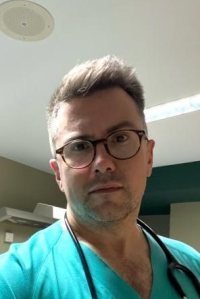
Dr. Ignacio Oulego Erroz graduated in Medicine from the University of Santiago de Compostela (2005). He completed his Pediatrics Residency at the University Hospital of Santiago de Compostela (2010) and subspecialty training in Pediatric Cardiology at Hospital Gregorio Marañón (2011). Since 2015, he has worked as a pediatric intensivist in the Pediatric Intensive Care Unit (PICU) at the University Care Complex of León. He earned his PhD with highest honors (cum laude) from the University of León in 2020, focusing on ultrasound-guided vascular access. He has supervised four doctoral theses in point-of-care ultrasound (POCUS), teaches in national POCUS courses, and authored official ultrasound guidelines for SECIP (Spanish Society of Pediatric Intensive Care), SENEO (Spanish Society of Neonatology), and AEP (Spanish Association of Pediatrics). He previously coordinated the SECIP POCUS Working Group and currently coordinates the SENEO Vascular Access Group. He is a member of NEVAT (European Neonatal Vascular Access Team) and ICC 2.0 (International Conference on Lung Ultrasound). He has authored more than 80 scientific publications (27 in Q1), including over 40 in the field of POCUS, and holds an h-index of 19. He serves as a peer reviewer for 24 international journals, including Intensive Care Medicine, Chest, The Lancet, and Archives of Disease in Childhood.
Dr. Erroz believes that a good academic paper addresses an important scientific or clinical question with rigorous methodology, transparent reporting, and clear, justified conclusions. It meaningfully contributes to the scientific community, either by adding new knowledge, refining current understanding, or challenging established ideas.
From Dr. Erroz’s perspective, bias can be minimized through a robust study design, preregistered protocols, adequate statistical adjustments, comprehensive methodology, and adherence to international reporting guidelines, such as CONSORT or STROBE. Objective interpretation of results and thorough peer review are essential to maintaining scientific neutrality.
“Scientific progress depends on perseverance, intellectual honesty, and collaboration. Every manuscript, even those that arise from challenging datasets or yield negative results, contributes to improving patient care. Continue writing, questioning, and refining your work—your efforts truly make a difference,” says Dr. Erroz.
(by Sasa Zhu, Brad Li)
Srujan Ganta

Dr. Srujan Ganta is a cardiothoracic surgeon at Rady Children’s Hospital in San Diego, California (RCHSD), specializing in care for congenital and adult congenital heart conditions. His academic and training journey includes an undergraduate degree in Biochemistry and a medical degree with research distinction from the University of Alberta. He then completed a six-year integrated cardiothoracic surgery residency at the Mazankowski Heart Institute and Stollery Children’s Hospital, earning certification in Cardiac Surgery (FRCSC). He further refined his expertise with a fellowship in pediatric and adult congenital cardiac surgery at the Medical University of South Carolina. His clinical interests span congenital and adult congenital heart surgery, heart/lung transplantation, ventricular assist devices, valve/coronary artery surgery, adult cardiac surgery, and cardiac electrophysiology. His current research focuses on impactful areas such as surgical strategies for single-ventricle palliation post-PDAS, optimizing Tetralogy of Fallot repairs, and novel techniques for TAPVR correction, to name a few.
Dr. Ganta states that a major challenge in academic writing is distilling complex clinical and operative data into a manuscript that is scientifically rigorous yet easy to interpret. Readers have limited time, and overly detailed or esoteric writing risks disengagement, so authors must clarify their core message and select only the most relevant supporting evidence. Heterogeneous patient populations, multifactorial outcomes, and nuanced operative techniques in cardiac surgery make it difficult to present findings clearly without oversimplifying. Ensuring the narrative is objective, data-driven, and transparent while acknowledging limitations is essential, particularly when dealing with small cohorts and multiple confounders. Coordinating input from multiple coauthors with differing perspectives can also create friction, which requires professionalism and, in some cases, attention to team relationships to overcome. Finally, the peer-review process introduces additional challenges, demanding flexibility, patience, and the recognition that objective feedback ultimately strengthens the manuscript.
From Dr. Ganta’s perspective, evidence synthesis in cardiac surgery writing requires discrimination between high-quality data and observational experience, especially given the rarity of many congenital defects. Identifying the highest level of evidence available and prioritizing these studies, and then working towards lower levels of evidence, is a useful approach to parsing data. An example of this would be starting with multi-institutional randomized trials and working towards single-center experiences. It is important to evaluate whether a patient population or era for a study aligns with the question being asked. Failing to recognize a shift in ideology or results over time can lead to conclusions that may be misleading. It is important to pay attention to sample sizes, selection bias, learning curve effects, and institutional preferences, which weigh heavily on surgical outcomes. Evidence synthesis requires balancing rigor with realism, integrating the best data while acknowledging limitations in the literature and how this may shape the strength of conclusions.
“Translational Pediatrics offers a unique platform that bridges scientific discovery with clinical practice, making it ideal for work that aims to advance outcomes in congenital and pediatric cardiac care. Its editorial standards and international readership ensure that high-quality cardiothoracic research reaches clinicians and investigators who can apply it to clinical practice,” says Dr. Ganta.
(by Sasa Zhu, Brad Li)
Christopher Horvat and Mo Shaik
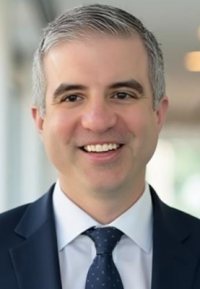
Christopher M. Horvat, MD, MHA, MSIT, and Mohammed A. Shaik, MD, PhD, are physician-scientists in Pediatric Critical Care Medicine at UPMC Children’s Hospital of Pittsburgh and the University of Pittsburgh School of Medicine.
Dr. Horvat is a board-certified pediatric intensivist, Associate Professor, and clinical informatician whose work focuses on learning health systems, embedded clinical trials, quality improvement, and large-scale health data science to improve outcomes for critically ill children. He provides national leadership in pediatric critical care informatics. Connect with him on LinkedIn.
Dr. Shaik is a Pediatric Critical Care Medicine Fellow and T32-supported physician-scientist whose research centers on high-frequency physiologic waveform data, dynamic cerebrovascular and cardiopulmonary modeling, and the development of real-time analytics pipelines to enable precision neurocritical care. His work emphasizes translating complex physiologic signals into clinically meaningful decision-support tools. Connect with him on LinkedIn.
Together, they pursue scalable, data-driven approaches to advance individualized critical care delivery.
TP: What were the difficulties your team encountered in this current work?
Drs. Horvat and Shaik: In writing this editorial, the central challenge was bridging population-level trial evidence with bedside clinical reality. While Oxy-PICU provides important data supporting conservative oxygen targets, we had to carefully consider how oxygen saturation, just one vital sign among many, interacts with pulse oximetry limitations, occult hypoxemia risk, and the patient's complete physiological picture. Another difficulty was achieving the right tone. Early drafts were too conclusive about the safety of conservative targets, but thoughtful peer feedback pushed us to acknowledge significant uncertainties: potential neurocognitive effects, cumulative harms from recurrent desaturations, and vulnerabilities in specific populations. This helped us reach a more honest position: that Oxy-PICU represents directional evidence for careful consideration rather than a mandate for universal practice change. Finally, we worked to make complex physiological concepts accessible while emphasizing why thoughtful, context-sensitive implementation matters more than blanket protocol adoption.
TP: Is it important for authors to disclose Conflict of Interest (COI)?
Drs. Horvat and Shaik: COI disclosure is not merely an administrative formality; it is foundational to preserving scientific credibility in an era when medicine is increasingly intertwined with data platforms, device manufacturers, and algorithmic tools. In critical care research, even subtle financial or intellectual incentives can shape study design, endpoint selection, or analytic framing, often unconsciously. More importantly, COI transparency allows readers to correctly contextualize findings and interpret both the scope and limitations of conclusions. In emerging fields such as AI-enabled monitoring and digital physiology, where industry partnerships are often necessary to access data streams and devices, disclosure becomes even more critical. Transparency does not invalidate research. However, failure to disclose can erode trust in both individual studies and the broader scientific enterprise.
TP: Academic writing takes a lot of time and effort. What motivates you to do so?
Drs. Horvat and Shaik: Our primary motivation is the belief that modern critical care is on the brink of a paradigm shift from episodic, threshold-based decision making to continuous, physiology-aware, predictive care. Academic writing is the mechanism through which we formalize that transition by forcing us to translate signals into meaning, meaning into metrics, and metrics into tools that can ultimately change bedside practice. Writing is also how interdisciplinary work becomes durable. Complex physiologic modeling, data engineering pipelines, and computational frameworks only become clinically useful once they are clearly described, validated, and reproducible. Each manuscript is therefore not simply a report of findings, but a scaffold for future investigators, clinicians, and trainees to build upon. In that sense, writing is not an endpoint but rather an infrastructure for the next generation of critical care science.
(by Brad Li, Masaki Lo)
Yoshiki Kusama
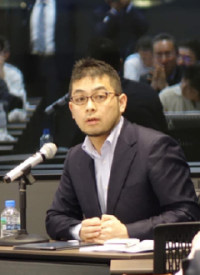
Yoshiki Kusama obtained a medical license in 2006 and completed two years of postgraduate clinical training. After the training, he practiced primarily in secondary care as a pediatrician. During that time, he developed a strong interest in infectious diseases and pursued infectious diseases as his subspecialty. In 2017, when the Antimicrobial Resistance Reference Center was established in Japan as a national government-commissioned initiative, he joined as one of the founding members and conducted research on antimicrobial resistance. His work focused mainly on developing a national framework to estimate antimicrobial consumption across Japan. In 2021, he returned to clinical practice and is currently working at Osaka University Hospital as an infectious disease consultant for both pediatric and adult patients. In parallel, he conducts a wide range of research related to infectious diseases.
TP: What are the most commonly encountered difficulties in academic writing?
Dr. Kusama: My research motivation is to improve society through my work, and many of my research ideas arise from discontent or frustration with the world. When I come up with a good idea, I feel compelled to start the research as quickly as possible. As a result, I often begin research before making sufficient preparations, which I sometimes regret later on.
I truly enjoy research and have never found the research process itself particularly difficult. However, thorough preparation before starting a study is something I find challenging.
TP: The burden of being a scientist/doctor is heavy. How do you allocate time to write papers?
Dr. Kusama: During the daytime, I am usually occupied with clinical work and other responsibilities. After work, I prefer to return home as early as possible to spend time with my family. And to be honest, I get hungry quite easily in the evening. For this reason, most of the time I devote to research is in the early morning. Writing papers in the morning while having a rice ball and miso soup has become part of my daily routine.
TP: What is fascinating about academic writing?
Dr. Kusama: Seeing my research published and read by many people, as well as cited by a wide range of studies, is highly rewarding for me. I also have a desire to improve the society through research. Therefore, if my work can help the society move even slightly in a better direction, that is something I find deeply fascinating.
(by Brad Li, Masaki Lo)
Sheikh Arif Maqbool Kozgar
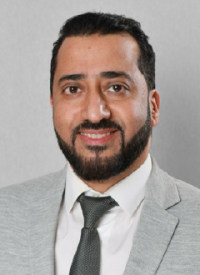
Dr. Sheikh Arif Maqbool Kozgar is a clinician-academic paediatrician working in regional Victoria, Australia. He is the Director of Clinical Training at Latrobe Regional Health and an Adjunct Senior Lecturer with Monash University at Monash School of Rural Health. His research interests sit at the intersection of everyday clinical practice and service improvement, with a focus on neonatal and perinatal outcomes in regional and disadvantaged populations, paediatric allergy and diabetes. Recent work has explored on topics such as newborn risk factors, early neonatal outcomes, and diabetic ketoacidosis using real-world hospital data to inform safer, more equitable care. Alongside research, Dr. Kozgar is passionate about teaching and mentorship, supporting medical students and junior doctors through structured supervision, assessment, and quality improvement.
TP: What are the most commonly encountered difficulties in academic writing?
Dr. Kozgar: For most clinicians, the hardest part is finding time and mental space to write consistently, especially when clinical demands are high. Another frequent challenge is getting the story right, moving from a collection of results to a clear message that matters to practice. As most clinicians have no formal education in academic writing, authors also struggle with structure and precision: writing too broadly, conflating aims and outcomes, or failing to align methods tightly with the research question. Finally, peer review can feel confronting at first, but it is helpful when treating it as a collaborative process, using feedback to make the paper clearer, more defensible, and more useful to readers.
TP: Academic writing frequently involves evidence synthesis. Can you share tips on selecting the appropriate evidence for synthesis and analysis?
Dr. Kozgar: It is important to be very clear about the clinical question and the setting (remember PICO), as the best evidence is what actually answers your question. Deciding upfront what to include and exclude helps prevent cherry-picking studies subconsciously later. We should prioritise robust study designs and well-described cohorts, but real-world observational data can be highly valuable, particularly in paediatrics and regional settings where evidence gaps are common. While synthesising, authors need to pay close attention to differences in populations, outcome definitions, and time periods, because these are often the main reasons studies don’t align neatly. It’s also important to be transparent about limitations and bias, and to avoid over-claiming. A good synthesis doesn’t just summarise papers; it helps the readers understand what is most reliable, what is not certain, and what should happen next in research or clinical care.
TP: Why do you choose to publish in TP?
Dr. Kozgar: I enjoyed publishing in TP because it connects with clinicians and researchers interested in work that can directly influence practice. The journal fits well with clinically oriented research, including studies using field data, and it emphasises a translational approach by linking findings to outcomes that benefit children and families. I also appreciate the constructive review process, which aims to increase clarity and clinical relevance while recognising researchers' limitations and valuing their efforts. This ultimately boosts the value and effect of the research.
(by Brad Li, Masaki Lo)